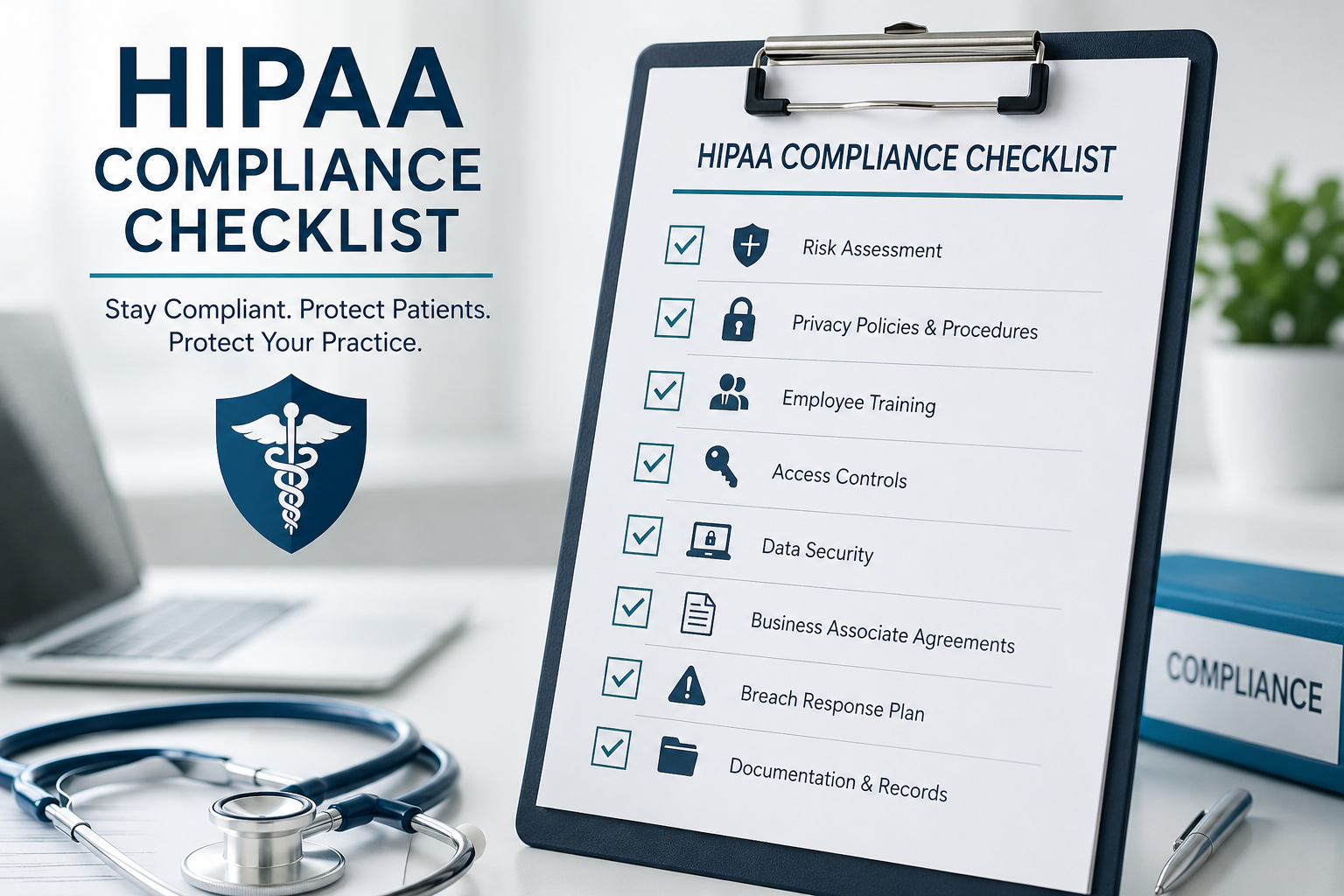
HIPAA compliance is not simply about maintaining a compliance binder in the office. In 2026, healthcare providers face increasing scrutiny from regulators, growing cybersecurity threats, ransomware attacks, employee privacy concerns, and evolving operational risks.
For healthcare organizations across Mississippi, a proactive HIPAA compliance strategy can help reduce the risk of investigations, penalties, breaches, and professional liability concerns.
Whether you operate a physician practice, hospital, behavioral health facility, pharmacy, nursing facility, dental office, or specialty clinic, this HIPAA compliance checklist can help your organization evaluate potential vulnerabilities and strengthen privacy and security practices.
At Gilchrist Donnell, we help Mississippi healthcare providers address HIPAA and HITECH compliance concerns before problems escalate into costly investigations or enforcement actions.
Why Does HIPAA Compliance Matter More Than Ever
Healthcare providers are facing increased pressure from:
- Cybersecurity attacks
- Ransomware incidents
- Employee privacy violations
- Patient complaints
- OCR investigations
- Licensing concerns
- Third-party vendor vulnerabilities
Unfortunately, many providers do not realize there are compliance gaps until a complaint, breach, or audit occurs.
The good news: many HIPAA problems are preventable with proactive planning.
HIPAA Compliance Checklist
Below is a practical HIPAA compliance checklist Mississippi healthcare providers can use to evaluate their current compliance efforts.
1. Conduct a HIPAA Security Risk Analysis
One of the most common OCR findings is failure to conduct a proper risk analysis.
Ask yourself:
✅ Has your organization completed a documented HIPAA security risk analysis?
✅ Is it updated regularly?
✅ Are vulnerabilities documented and promptly addressed?
✅ Has an analysis been performed after major operational or technology changes?
Providers should not simply perform a risk analysis once.
2. Review HIPAA Privacy Policies and Procedures
HIPAA policies should reflect how your organization actually operates.
Questions to ask:
✅ Are written privacy policies current?
✅ Do procedures match day-to-day workflows?
✅ Are staff following documented protocols?
✅ Have policies been updated for remote work, telehealth, texting, and cybersecurity concerns?
Outdated policies often become problematic during investigations.
3. Train Employees Regularly
Many HIPAA violations occur because of employee mistakes rather than intentional misconduct.
Healthcare organizations should ask:
✅ Are employees receiving appropriate and prompt HIPAA training?
✅ Are new hires trained during onboarding?
✅ Is cybersecurity awareness included?
✅ Are training records documented?
Training should occur at hire, when policies change, when an employee’s job or role changes, and (according to best practice) annually.
Topics should include:
- Patient confidentiality
- Proper record access
- Texting and email risks
- Social media concerns
- Password security
- Reporting suspicious activity
4. Restrict Access to Patient Information
Employees should only access information necessary to perform their job duties.
Questions to evaluate:
✅ Are role-based access controls in place?
✅ Are employees prevented from unnecessary record access?
✅ Are audit logs reviewed regularly?
✅ Is unauthorized access investigated?
Unauthorized chart access remains one of the most common HIPAA violations.
5. Protect Electronic Protected Health Information (ePHI)
Healthcare cybersecurity is increasingly important.
Ask:
✅ Are devices encrypted?
✅ Are passwords secure?
✅ Is multi-factor authentication enabled?
✅ Are remote access systems secure?
✅ Are laptops, tablets, and mobile devices protected?
Cybersecurity failures are becoming a major source of OCR scrutiny.
6. Review Business Associate Agreements (BAAs)
Healthcare providers often overlook vendor-related HIPAA risks.
Ask:
✅ Have all vendors with access to PHI signed compliant business associate agreements?
✅ Are agreements current?
✅ Are vendor responsibilities clearly defined?
Examples of vendors include:
- Billing companies
- IT providers
- Cloud storage companies
- Telehealth vendors
- Consultants
- EHR systems
Third-party breaches can still create exposure for healthcare providers.
7. Review Patient Authorization Procedures
Improper disclosures frequently result from authorization mistakes.
Ask:
✅ Does staff understand when authorization is required?
✅ Are release forms reviewed regularly?
✅ Are procedures in place for family requests?
✅ Are minor consent issues addressed properly?
Disclosure mistakes can become especially complex in behavioral health and sensitive treatment settings.
8. Secure Physical Records and Workspaces
HIPAA compliance extends beyond computers.
Evaluate:
✅ Are paper records stored securely?
✅ Are workstations protected from public viewing?
✅ Are visitor access restrictions in place?
✅ Is sensitive information left visible?
Simple physical security mistakes still trigger complaints.
9. Develop a HIPAA Breach Response Plan
Every healthcare organization should have a plan before a breach occurs.
Ask:
✅ Does your organization have an incident response plan?
✅ Do employees know who to report concerns to?
✅ Are breach investigation procedures documented?
✅ Are notification obligations understood?
Fast, organized responses can significantly reduce legal and operational risk.
10. Review Documentation and Retention Practices
Documentation matters during audits and investigations.
Ask:
✅ Are compliance activities documented?
✅ Are training records maintained?
✅ Are risk assessments preserved?
✅ Are privacy complaints documented?
If regulators request records, incomplete documentation can become a major issue.
11. Evaluate HIPAA Compliance for Texting, Email, and Telehealth
Modern communication creates modern risks.
Questions to ask:
✅ Are providers texting patients securely?
✅ Are emails encrypted when necessary?
✅ Are telehealth platforms compliant?
✅ Are staff using personal devices appropriately?
Convenience should never outweigh compliance.
12. Conduct Mock Audits Periodically
Many organizations discover compliance gaps only after a problem occurs.
Consider asking:
✅ Could your organization respond quickly to an OCR investigation?
✅ Would policies be easy to produce?
✅ Are staff prepared to explain compliance procedures?
Mock audits or “table exercises” can help identify weaknesses proactively.
The Biggest HIPAA Mistake Healthcare Providers Make
The most common mistake is assuming compliance is a one-time project.
HIPAA compliance requires ongoing attention because:
- Technology changes
- Cybersecurity threats evolve
- Staff turnover happens
- Regulations shift
- Operational workflows change
Healthcare providers that periodically reassess compliance tend to be better positioned when problems arise.
Warning Signs Your Organization May Have Compliance Gaps
You may need a HIPAA review if:
- Policies have not been regularly reviewed and updated as needed
- Staff do not receive regular training
- Risk analyses are not performed regularly and/or remedial actions are not taken
- Employees use personal devices regularly without appropriate security measures
- Vendors lack current, compliant business associate agreements
- Privacy complaints are increasing
- There is uncertainty about disclosure rules
Even well-run healthcare providers can develop compliance blind spots.
How Gilchrist Donnell Helps Mississippi Healthcare Providers
At Gilchrist Donnell, we help healthcare organizations across Mississippi navigate:
- HIPAA and HITECH compliance
- OCR investigations
- Employee training
- Healthcare privacy concerns
- HIPAA breach response
- Regulatory compliance issues
- Licensing-related matters
- Internal investigations
Our goal is to help providers strengthen compliance programs while minimizing unnecessary disruption to operations.
Frequently Asked Questions About HIPPA Compliance
Is HIPAA training required every year?
HIPAA requires workforce training, and in the healthcare industry conducting annual training to maintain compliance and reduce risk is a best practice.
How often should a provider complete a HIPAA risk analysis?
Providers should conduct risk analyses regularly and update them when operational or technology changes occur.
What is the most common HIPAA compliance mistake?
Common issues include poor employee training, weak cybersecurity protections, missing business associate agreements, and failure to conduct risk analyses.
Do small medical practices have to comply with all HIPAA requirements?
Yes. Small practices are still expected to comply with all HIPAA requirements, even if they lack dedicated compliance departments.
What should providers do if they are unsure about compliance?
Healthcare organizations should consider proactive legal or compliance guidance before problems lead to breaches, investigations or enforcement actions.